Archive of ‘Speeches’

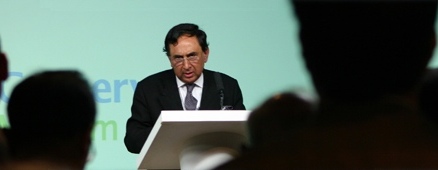
International Takaful Summit 2011 Opening Speech07.11.11

I would like to thank Mr Iqbal Asaria for extending a kind invitation for me to address the Summit today.

In fact I am speaking again at the awards dinner tonight and at the dinner which I am hosting in the Carlton Club tomorrow.

Over the last few years, Mr Asaria and his team have consistently arranged these conferences with the utmost professionalism. It is a pleasure for me to be here today.

I hope that you will find the Conference fulfilling and I am pleased that it has received worldwide support and the efforts put in by the organisers have been fruitful.

It is fitting that the Conference is being held here in London again.

In London we have been writing insurance business going back centuries and we have a long history of underwriting all classes of insurance risks.

Although we have been involved in the underwriting of various risks in London for many years, we are indeed very innovative and progressive and we have been at the forefront when it comes to the underwriting of new and different types of insurance covers.

I am a freeman of the city of London and I am very proud of my connections with the city.

I have also been a Lloyds insurance broker.

When I was elevated to the House of Lords I took the title of Baron Sheikh of Cornhill in the city of London.

The Islamic finance system is founded upon the central theme of achieving sustainable growth and shared prosperity whilst promoting innovation.

A great deal of importance is placed upon innovation as it is vital to the creation of new products and services within the sector.

Modern Islamic finance emerged in the mid 1970s with the founding of Islamic banks but the growth has been very rapid since the 1990s. The market is now worth over $1 trillion dollars globally of which Takaful accounts for 1%.

Countries with stable and strong governance and regulatory support are conducive to increasing demand for Takaful products.

I would like to declare an interest in that I have recently founded and I am the Chairman of Iqra Ethical plc, which is a company based in Westminster that will offers training, consultancy and trading in Islamic finance services.

We will undertake this both in the United Kingdom and globally.

I would also like to state that I have owned and built successful businesses relating to insurance, financial services and properties and I am Chairman of four companies.

In my business career I have dealt with general insurances, life assurance and mortgages.

I have actively supported mutual insurance companies and building societies and this is another reason I do like to promote Islamic financial arrangements. The principle of mutuality appeals to me.

I am a founder member of the Associate Group of British Parliamentarians on Islamic banking and I have been elected as its Vice Chairman. It is an active organisation and we meet frequently. One of the issues which we are pursuing is the issue of Sovereign Sukuks.

Recently I had a meeting with Lord Sassoon, Commercial Secretary to the Treasury, along with the other office bearers of the Associate Parliamentary Group on Islamic Finance.

Sovereign Sukuk was one of the matters which we discussed at the meeting but there are issues relating to cost of issuance which need to be examined further.

We also discussed the size of the issue and the demand for it. The issuance needs to be very large, well in excess of 1 billion pounds but we need to see whether there will be a demand for it.

I have also engaged with the Conservative Party’s front bench on Islamic finance in my own right and also on behalf of the Parliamentary Group. There is now an interest amongst the Members of the House of Commons and House of Lords of the British Parliament.

A considerable number of people who prefer Islamic financial structure are non-Muslims who value and like the ethical and mutual structures of these arrangements.

In regard to United Kingdom and Europe I would like to state that there are 2 million Muslims in the United Kingdom and 20 million in Europe.

If we also reach out to non-Muslims the potential is considerable as the populations of the United Kingdom and Europe are 60 million and 450 million respectively.

Islamic finance is all to do with ethical forms of investment, and also investing in businesses and industries that are good for society and the environment at large. Islamic financial arrangements work for the benefit of society. For example there are opportunities to invest in the generation of energy by renewable means.

Islamic finance should not remain a niche, but through its appeal to everyone irrespective of religion, its market should be part of the mainstream market, increasing its potential manifold.

Islamic financial institutions should target not only Muslims but also non-Muslims, particularly in Western countries, and their products and the pricing should be such that it appeals to a wider audience.

The Shariah Supervisory Board of Islamic finance plays an important role in safeguarding the inherent benefits of the system. The Board is a pre-requisite for any Islamic finance institution. Its main role is to ensure that all dealings are strictly compliant with Shariah law.

The role of the scholars is vital and it is therefore important that they are trained in Shariah principles as well as conventional arrangements. We need to ensure that there are adequate training schemes in all aspects of financial transactions.

Furthermore, it is also important that we train a new intake of scholars to cope with the growing demand of the industry.

If we are to promote and develop Islamic products it is important that we look at the human resources and train our staff adequately and also keep a close control over expenses.

In addition to what I have said, if we are to succeed and expand we need to ensure that our service standards are high and we are cost effective in every way.

This means that our work practices and computer systems must be efficient. I have followed these practices which have enabled me to run successful business organisations.

To enable us to succeed in achieving our expansion for Islamic finance we need to develop and market a range of products which will fulfil the needs of people and cater for local conditions in the relevant country where we would like to write business.

In all of my business dealings I have always produced profitable results for the benefit of everyone and I am sure that the delegates at the Conference would like to achieve these objectives as well.

I would like to conclude by saying I fervently believe in Islamic banking and financial services, including Takaful, and I will continue promoting these in the United Kingdom and elsewhere in the world.

Archive for Speeches

Dialogue Seminar Speech following the Opening of the Exhibition “Muhammad - A Mercy to Mankind”06.16.11

SPEECH MADE BY LORD SHEIKH AT THE DIALOGUE SEMINAR FOLLOWING THE OPENING OF THE EXHIBITION “MUHAMMAD – A MERCY TO MANKIND” AT THE ISLAMIC CULTURAL CENTRE AND LONDON CENTRAL MOSQUE ON 16th JUNE 2011

I was brought up in Uganda where there were people of different racial and religious background. I learnt to speak several languages and developed an understanding as well as respect for all religions.

My father was very well known in our home town and as a boy and a youth I accompanied my father with members of my family on visits to Churches, Hindu Temples, Sikh Gurdwaras and other places of worship including the Bahai Temple.

I am a Conservative peer and I am active in the House of Lords. I speak on a variety of subjects and I do not confine myself to ethnic issues but I have quoted The Holy Koran and sayings of the Prophet Muhammad (peace be upon him) to explain the true message of Islam.

I am also chairman of the Conservative Muslim Forum and I am involved in promoting inter-faith dialogue and harmony amongst various racial and religious groups.

I believe that there are more similarities than differences between people and we should highlight the similarities in order to establish closer links between communities.

I believe it is important to maintain a dialogue between various racial and religious groups and dispel misunderstandings. I also believe that lack of understanding leads to suspicions and divisions between people.

It therefore gives me great pleasure to speak at an event which seeks to break barriers and build bridges between our various communities. Events like this gathering play an important role in affirming and celebrating Britain’s status as a diverse and multi-cultural society.

Mutual understanding, respect, and inter-faith dialogue are essential if we are all to coexist peacefully. Islam teaches us to celebrate the difference and diversity which God has purposefully created in our world.

Sura 49 ayah 13 of the Holy Koran says:

‘O mankind! We have created you from a male and a female, and made you into nations and tribes, that you may know one another. Verily the most honourable among you in the sight of Allah is he who has piety and righteousness”

Despite the image portrayed in some of today’s media, Islam has a long and proud history of tolerance and respect for people of other faiths.

The Holy Koran is emphatically clear on this point, stating ‘let there be no compulsion in religion’, and this has been manifest in Muslim civilization throughout history.

About six weeks ago I visited Jerusalem and I would like to make two points that reinforces the acceptance of all religions in Islam.

In the 7th Century, the Muslims were victorious at the Battle of Yarmouk and conquered Jerusalem. The leaders of the city asked the Muslim generals that they will surrender the city to the leader of the Muslims and thus Khalifa Omar travelled to Jerusalem.

Khalifa Omar did not pray in the Church of Holy Sepulchre as he was concerned that if he prayed there the Muslims will convert the church into a mosque. He respected the Christian faith and prayed in the courtyard.

Khalifa Omar granted the people of Jerusalem a covenant of peace and protection and also said that the holy places of all religions need to be respected.

There is a mosque near the Church of Holy Sepulchre called Khalifa Omar’s Mosque and I have prayed at the mosque.

The relevant excerpts from the Jerusalem Declaration are actually displayed on the outside of the mosque.

I would also like to mention that when Salahuddin Ayyubi conquered Jerusalem in the 12th Century he permitted people of all religions to stay in the city and they were respected and had protection.

When the Muslims were persecuted at the start of our glorious religion the Muslims escaped to Abyssinia where they were given refuge by a Christian King who was King Negus.

We have come to the United Kingdom which is a Christian country and the British people for all their faults are generally tolerant and they have accepted us in this country. It is important that we regard this country as our home and live in peace and harmony with everyone.

I used to be a visiting lecturer at colleges and education is something that is very dear to my heart. I have always promoted the value of education as I believe that good education is the key to a better future.

To us Muslims education and knowledge is very important and we are proud of our contributions to the world of science, learning, literature, mathematics, medicine and commerce. Muslims have also excelled in numerous other fields such as art, architecture, astronomy, geography and irrigation.

Many crucial systems such as the Arabic numerals, and the concept of the zero were transmitted to medieval Europe from the Muslim world.

Muslim scientists developed sophisticated instruments such as the astrolabe, which has been described as the single most important calculating device before the invention of the digital computer.

In the Exhibition today we can see displays of various items which give a very brief description of achievements of the Muslims and their contributions to the world in various fields.

In Islam there have been great dynasties and empires which include the Ummayads, the Abassids in Iraq, the Fatimids in Egypt, the Ottoman Empire and the Mughals in India. All these empires and dynasties have contributed a great deal to the understanding and promotion of the subjects I have described.

Islam is one of the Abrahamic religions and we believe in the Prophets who are mentioned in the Bible including the following Prophets (peace be upon them) –Adam, Noah, Abraham, Moses, Jacob and Jesus. God’s guidance to mankind started with Prophet Adam (pbuh) and ended with Prophet Mohammed (pbuh).

According to Islam people of the book are Muslims, Jews and Christians. The books of Allah are Zabur (Psalms) of Dawud (David), Tawrat (Torah) of Musa (Moses), Injil (Gospel) of Isa(Jesus) and Koran revealed to Prophet Mohammed (pbuh). The Koran also mentions scrolls of Abraham. I may add that the Holy Koran has an entire chapter which is titled Maryam (Mary mother of Jesus).

There are a number of similarities between Sikhism and Islam and I would like to state that the foundation of the Golden Temple in Amritsar was laid by Mian Mir, a Muslim holy person.

One of the constant companions of Guru Nanak Sahib was Mardana who was a Muslim. He accompanied Guru Nanak Sahib on his journey to Mecca and Medina. In the Guru Granth Sahib there are writings of a Muslim, Sheikh Farid.

In regard to suicide bombings Islam forbids committal of suicide. Islam maintains a protection of life and does not sanction any violation against it, irrespective of people’s religion or race. In the Holy Koran it is written “who ever kills a human being then it is as though he has killed all mankind, and whoever saves a human life it is as though he had saved all mankind”.

This saying is very similar to what is written in The Talmud where it is written “If you save one life, it is as if you have saved the world”.

A book has been published which highlights cases where Muslims saved Jews from the atrocities of the Nazis during the Holocaust and in fact I am going to launch the book in the House of Lords.

Finally I would like to reiterate that there are more similarities between people than differences and we should all share the same hopes and take actions to maintain and promote peace and harmony between all the communities.

Archive for Speeches

Question on Palestine05.16.11

Lord Sheikh:

To ask Her Majesty’s Government what is their assessment of the proposed Palestinian statehood declaration, which is planned to be placed before the United Nations General Assembly in September.

The Minister of State, Foreign and Commonwealth Office (Lord Howell of Guildford): My Lords, we see negotiations towards a two-state solution as the only way to meet the national aspirations of Israelis and Palestinians and lead to a sovereign, viable and contiguous Palestinian state living in peace and security alongside a safe and secure Israel and their other neighbours in the region.

The UK is fully committed to supporting the Fayyad plan and helping build the institutions of a future Palestinian state, but a negotiated solution remains the only result that will actually bring peace and justice to the Palestinian people. We call on the parties to return urgently to negotiations.

Lord Sheikh: My Lords, I thank the Minister for his response. Does he think that the agreement signed by Fatah and Hamas is a step in the right direction for the attainment of statehood? Does he also feel that the work done by the Prime Minister, Salam Fayyad, in building the Palestinian institutions and economy has created the apparatus of a state, and that these achievements need to be recognised?

Lord Howell of Guildford: Of course this step is not yet fully consummated, but we want to see the formation of a Government who reject violence. If Hamas is to be part of that Government, it must reject violence; that is our position. If that were to go forward on the basis of the rejection of violence, we would see that as a good basis for building further hopes and moves towards serious negotiation. The Fayyad plan, as I have said, is something that we support. It takes us in the right direction towards building Palestinian statehood and getting the negotiations going again, which is central and crucial.

Archive for House of Lords, Palestine, Speeches

Environment Speech at EcoMuslim Seminar05.13.11

Your Excellencies, Ladies and Gentlemen.

This meeting has been organised by EcoMuslim and I am therefore going to speak on climate change and issues relating to the environment and also talk about the Islamic perspective on the subject of the environment.

I will also speak briefly about utilising funds generated by Islamic financial institutions for the betterment of the community.

Before I speak on the subject of environment I would like to say that about three weeks ago I visited Jerusalem and the West Bank.

There are two points that I would like to refer to which reinforce the acceptance of other religions in Islam.

In the 7th Century, the Muslims were victorious at the Battle of Yarmouk and conquered Jerusalem. The leaders of the city asked the Muslim generals that they will surrender the city to the leader of the Muslims and thus Khalifa Omar travelled to Jerusalem.

Khalifa Omar did not pray in the Church of Holy Sepulchre as he was concerned that if he prayed there the Muslims will convert the church into a mosque. He respected the Christian faith and prayed in the courtyard.

Khalifa Omar granted the people of Jerusalem a covenant of peace and protection and also said that the holy places of all religions need to be respected.

There is a mosque near the Church of Holy Sepulchre called Khalifa Omar’s Mosque and I have prayed at the mosque.

The relevant excerpts from the Jerusalem Declaration are actually displayed on the outside of the mosque.

I would also like to mention that when Salahuddin Ayyubi conquered Jerusalem in the 12th Century he permitted people of all religions to stay in the city and they were respected and had protection.

I am now going to talk about climate change and the environment.

I am passionate about the preservation of the environment and in fact when I was elevated to the House of Lords my maiden speech was on the environment.

I have also subsequently taken part in debates and discussions on climate change in the British Parliament.

Climate change is the greatest environmental challenge facing the world today.

The rising global temperatures will bring changes in weather patterns, rising sea levels and more instances of extreme weather.

The changes that are occurring are mainly due to human behaviour and the effects are estimated to have a larger impact on the climate as time goes on.

The problems that we face are global and thus we need to find global solutions to them that incorporate all of the countries in the world working together to try and combat climate change.

I am now going to talk about Islam and the environment. The Holy Prophet Muhammad (peace be upon him) has said:

‘The earth is green and beautiful and Allah has appointed you his stewards over it.’

This emphasises the fact that in Islam, the conservation of the environment is based on the principle that all the individual components of the environment were created by God, and that all living things were created with different functions.

Furthermore in Islam humans are expected to protect the environment since no other creature is able to perform this task.

Humans are the only beings that Allah (swt) has entrusted with the responsibility of looking after the Earth.

I would also like to quote another saying from the Holy Prophet (peace be upon him) which is:

“When doomsday comes, if someone has a palm shoot in his hand he should plant it”

I would now like to state that the Holy Prophet (peace be upon him) instructed Muslims that even at times of war not to harm women and children.

Khalifa Abu Bakr also instructed them not to harm animals, destroy crops or cut down trees.

This highlights that the Holy Prophet and Khalifa Abu Bakr realised the value of nature and the importance of the preservation of the environment.

Climate change is possibly the biggest threat to life on the planet, and most of the effects are likely to be felt in Muslim majority countries.

For example there may be future water crises in the Middle East, flooding in Bangladesh, desertification of sub-Sahara Africa, submergence of the Maldives and much more. All of this will lead to more wars and produce environmental refugees.

In the United Kingdom, large steps have been taken to try and address the problem of climate change.

In November 2008 the Climate Change Bill was passed and thus became part of the law of the country as the Climate Change Act.

The Act states that the United Kingdom will attempt to achieve an 80% reduction in six different greenhouse gases by the year 2050 and also set a target of reducing carbon dioxide emissions by at least 26% by 2020 against a 1990 baseline.

In passing the Climate Change Act, the United Kingdom became the first country to set up a long-range carbon target into law.

I sincerely hope that many other countries follow the lead of the United Kingdom and make serious moves towards reducing global greenhouse gas emissions.

The Committee on Climate Change was created which is an independent expert body to advise the Government on the level of carbon budgets and on where cost-effective savings can be made.

Earlier this week the Committee for Climate Change published its Renewable Energy Review which was requested under the Coalition Agreement.

It highlights a range of promising renewable energy technologies which could in future become competitive, including electricity generation from wind and marine, air and ground source heat pumps and the use of bioenergy for heat generation.

Analysis in the report highlights the importance of other low-carbon technologies for power generation, such as nuclear and Carbon Capture and Storage, which have a potentially major role to play in the required power sector decarbonisation to 2030.

The UK is the second most attractive clean energy market in Europe according to research conducted by the accountants KPMG.

The KPMG report says that the UK could become a top investment destination and there would be rewards for the investors.

There is a considerable appetite now for investors to financially support ventures where there is production of energy by renewable means and there is a clear opportunity for the coalition Government to secure the UK’s position as a world leader in renewable and offshore technology.

By investing in ventures to produce energy by renewable means and carbon capture, the investors would do three things:

1. Help the environment

2. Create jobs

3. Produce income for the investors

Yesterday the Minister for Energy and Climate Change opened the Mabey Bridge wind turbine tower manufacturing facility in Chepstow which will be a tremendous boost for the UK renewable energy industry.

The Government has also submitted 12 applications from UK energy projects to the European Investment Bank for consideration of funding but there will also be opportunities for private investors

A company called Vestas announced on Wednesday that it will commit to building the biggest offshore wind turbines in the world in Kent. The wind farms will be installed in the North Sea and English Channel.

I am actively involved in promoting Islamic finance both in the UK and overseas. Islamic finance is all to do with ethical forms of investment, and also investing in businesses and industries that are good for society and the environment at large.

Islamic financial arrangements work for the benefit of society and there are opportunities to invest in the generation of energy by renewable means.

As Islamic finance is growing at a rapid pace and I feel that banks and financial institutions who have accumulated Islamic funds can play a vital role in helping the environment and financially support projects which produce renewable energy and help to reduce emissions of carbon.

The funds invested will of course produce appropriate returns which will be of benefit to the stakeholders.

Finally we need to look at what we as people can do.

Climate change unites us all and each and every one of us will suffer if we allow runaway increases in our emissions to further damage an already ailing atmosphere.

We all need to protect our forests and everything green. We can undertake home improvements and cut down on energy wastage as well as recycle as much as possible.

We must remember that few will have the greatness to bend history itself; but each of us can work to change a small portion of events, and in the end, the combination of all of those small acts will result in a big difference being made.

Thank you

Archive for Speeches

Big Society05.11.11

My Lords, I am an enthusiastic supporter of the big society concept. I would like, in the limited time available to me, to talk about the role of the charitable sector, which is dear to my heart. In my contribution to the Second Reading of the Charities Bill last week, I was keen to stress how charities are a useful barometer of the degree of social cohesion.

The Bill will make a contribution to the big society by making charity law simpler to understand and navigate, which will reduce the existing complexities that serve to discourage participation. I await with eager anticipation the publication tomorrow of the Giving White Paper, which promises to focus on supporting the giving of time and money.

We should all work towards providing adequate recognition of the contribution of many civil society organisations. They do not exist to seek awards, but we should all be pleased that the big society awards are highlighting the achievements of those undertaking important work and, by raising the profile, encouraging wider participation.

Most charities appeal to people’s good nature and generosity by asking for donations of money and time. There needs to be an alternative to government provision in addressing problems in our society. The Government are correct in prioritising the big society as a means of providing that alternative. The British people are famous for their generosity and our record on charitable giving is impressive when compared internationally.

People need to be enabled to use the vehicle of the charitable sector to volunteer their time, energy and resources for the good of all. We should all think about taking responsibility for everyone else’s welfare interests: that is the big society. The success of this initiative will not rest entirely on the activities of the Government but requires participation from everyone.

We must enable the big society to flourish. This is about empowerment and enabling charities to make a bigger contribution. It is about individuals answering that human instinct to work together.

Archive for Speeches

Charities Bill05.05.11

My Lords, at the outset I should declare an interest as I have formed and entirely fund the Sheikh Abdullah Foundation, a small charity set up in my father’s memory which undertakes charitable work in the United Kingdom and overseas. I have also previously spoken in your Lordships’ House on the subject of the charitable sector. Charities are a fundamental barometer of the cohesion of our society and bring people together for a common cause. I feel that by performing charitable work people attain considerable satisfaction, and the work adds meaning to their lives. There are more than 170,000 charities in this country, an estimate of around 1 million charitable trustees, and our record for charitable donations is the best in Europe. We should therefore be justifiably proud of our charities.

I warmly welcome this Bill. As those of us who are heavily involved in charitable work will be only too aware, the law on the affairs of the third sector have become increasingly complicated in recent years. We should be grateful to the Law Commission, which, working with the Office for Civil Society and the Charity Commission, has undertaken the considerable workload of preparing this consolidation. The fact that the Table of Origins accompanying the Bill runs to 49 pages suggests that the Bill is long overdue-and it is a large Bill, with over 350 clauses.

None the less it is important, and the House will want to ensure that its provisions meet the ambitious tests that the Government have set themselves in bringing it forward. I believe that the Government are right to seek to bring together the principal provisions for charities into one piece of legislation, and to take this opportunity to simplify the structure of the provisions, making it easier for those who wish to practise charitable actions to understand and navigate. That will command widespread support right across the entire charitable sector, where the current system is complicated and inaccessible other than to experts.

In part, this Bill arises from a commitment given during the passage of the Charities Act 2006 to consolidate measures into a single piece of legislation. The current legislative basis is fragmented, with key provisions contained in the Recreational Charities Act 1958, the Charities Act 1993 and the Charities Act 2006, all of which have been subsequently amended. The Charity Commission is undertaking a review of its services and this may well result in a reduced role for the commission as part of reducing charity regulation.

Many people in the United Kingdom donate their time and energy to assist the work of various charities as trustees, volunteers and fundraisers. We should do all we can to ensure that their efforts are not undermined in any way by unnecessary complexity. The National Council for Voluntary Organisations has estimated that nearly 31 million people in this country volunteer informally, with over 20 million volunteering formally. We also have the big society deregulation taskforce, chaired by my noble friend Lord Hodgson, which is likely to suggest a number of measures to reduce regulatory burdens on voluntary activity. The Government are also working to implement my noble friend Lord Young’s recommendations on reducing health and safety burdens on organisations.

Cutting red tape and making it easier to volunteer is crucial in encouraging us to volunteer, and I look forward to the implementation of the national citizen service in this regard. The setting aside of £100 million in a voluntary sector transition fund will help many organisations in an environment of reduced public spend. I am also encouraged by the Government’s determination to ensure that charities and social enterprises will have greater opportunities to deliver public services.

Making it easier for people to donate to charity is welcome and the big society bank is an extremely exciting development. By expanding the social investment marketplace and helping to attract extra private sector investment, it is expected that the bank will generate hundreds of millions of pounds for charities, social enterprises and voluntary groups to help fund social projects across the country. The Bill will also assist the Government in the implementation of their big society agenda. We should take this opportunity to applaud the changes in the 2011 Budget such as the innovative 10 for 10 proposal, whereby if one leaves 10 per cent of one’s estate to charity, the inheritance tax will accordingly be reduced by 10 per cent. The Government should be commended on their commitment to civil society, and the charitable sector plays a critical role in delivering that agenda.

One of the key measures of the success of this Bill will be its ability to enable the charitable sector to get on with the excellent job it is doing and to devote less energy to the details of charitable law. We need to ensure that those who donate to charity can have confidence that their resources are being put to optimal use. It is estimated that over 50 per cent of the population make monthly donations to charity, and they want to see that their contributions are making a real difference for the particular cause they support.

Yet even in the area of donations we have not managed to optimise the opportunities. The Charities Aid Foundation has estimated that around £750 million each year goes unclaimed from the gift aid scheme. I welcome the action that the Government have taken on gift aid. In this year’s Budget the Chancellor announced reforms to the gift aid scheme in order to try to encourage more people to donate to charity. Under the new regulations charities will not have to declare gift aid when claiming it on small sums adding up to £5,000 over the course of a year. I hope the Minister will take the opportunity to reassure the House that the Government will ensure that, in the new framework, we can expect a silver service from the Charity Commission.

We should make it easier to establish and run a charity so that administration consumes fewer resources and the real value can reach those in need of charitable support. Our charities do excellent work and it should be our ambition to create the framework for them to go even further. This is what underpins the Government’s approach, and the Bill is but one part of that.

Too often, the good intentions expressed in this House do not translate into good law in the world outside. The Bill is an opportunity to get this right and to make a crucial difference to the charitable sector. In that context, I hope that the Government have given consideration to how best to engage people in the work of charities. Trustees are busy, working together. They have an average age of 57; only one in three is under the age of 50, and only 2 per cent under 30. Experience may bring benefits, but I hope that the Minister agrees that it would be good to encourage a greater number of younger people to get involved in charitable governance.

As the size of the charitable sector increases, there is more pressure on recruitment. We need to make sure that those who want to get involved in the work of charities can find a quick and simple way to match their interests with available opportunities. The perception of a complex regulatory framework can act as a deterrent, but the Bill has a chance to fix that-by consolidating provisions it should make the legislation more understandable and easier to navigate.

The current charitable landscape is encouraging and the Government have decided to address the concerns about complexity around the legal framework at an opportune time. I fully support the Bill.

Archive for Charity, House of Lords, Speeches

Middle East Peace Process05.04.11

My Lords, I care about humanitarian issues, and I have been involved in facilitating two convoys of humanitarian aid being sent to Gaza through the Rafah crossing. I have also visited Gaza with the consent of those on my Front Bench and the Conservative Party. I, along with three other British parliamentarians, visited Israel and the West Bank last month. While in Ramallah, we had a meeting with Prime Minister Salam Fayyad of the West Bank. During our meeting, the Prime Minister said that if and when the Palestinians get full independence, the half a million Israelis would be welcome to stay in the West Bank.

We also spent the best part of a day with an Israeli army officer and high officials in the Israeli Foreign Office to hear the Israelis’ point of view. I have therefore visited Gaza, Israel and the West Bank and have first-hand knowledge of the various issues.

In regard to Fatah and Hamas, the leaders of both groups have today signed a reconciliation pact in Cairo aimed at ending their four-year rift. The agreement paves the way for a joint interim Government and fixes a date for general elections next year. The Palestinians are aiming for a declaration of statehood in September, and I very much hope that all parties involved in the dispute will have something positive to say before the declaration.

I think that the peace plan submitted last month, whose signatories included two former leaders of the Israeli intelligence agency, Shin Bet, a former chief of Mossad and a former chief of the Israeli defence forces, needs to be considered. Israel is a mighty military power, but it must be magnanimous and arrive at a two-state solution whereby it has a guarantee of security and nationhood, but in return it must ensure that Arabs are fairly treated and have full independence. To achieve this, we need active participation and help not only from the two countries involved but from the United States, the European Union and, of course, other members of the quartet.

Archive for House of Lords, Speeches

Lord Sheikh Speech at Pakistan India UK Friendship Forum04.21.11

Archive for Events, Speeches

European Union Bill - Second Reading03.22.11

My Lords, at the outset I apologise for my late arrival at the beginning of the debate. This is an important Bill and it is timely that your Lordships should have the opportunity to debate it. As a tail-ender, I have listened carefully to the arguments put forward by various noble Lords but I am going to remain firm and support this Bill. The Government’s proposals are in concert with many other member states that give their electorates a voice if treaty changes propose a transfer of power to Brussels.

The European Union has delivered strong benefits for the United Kingdom since we joined and we should all be confident in the possibilities offered through free and open markets. Yet there has been a gradual erosion in public support for some other dimensions of what is sometimes referred to as the European project. We have witnessed a huge transfer of powers to Brussels in many policy areas.

For example, although we are not part of the eurozone it has been estimated that approximately 65 per cent of financial regulation affecting the City of London comes from Brussels. As an insurance broker and underwriting agent, I have a long-standing connection with the City of London.

The European Union has changed a great deal since we joined the then European Economic Community in 1973. We all recall the treaties that have come about since then including Maastricht, Amsterdam, Nice and Lisbon. These treaties have altered the nature of the institution profoundly, yet the British people have not had the opportunity to have their say since 1975. Arguably, some of those treaties have featured strongly in general election campaigns and have been grounded in party manifestos.

However, we need to recognise that people feel increasingly detached from European-level decision-making. As the European Union has undergone enlargement, so the distance between the ordinary voter and the European institutions has got that bit bigger.

I am of the opinion that greater efforts should be placed on making the public more knowledgeable about European Union affairs. Apathy is a big problem in local and general elections but is even worse when it comes to European elections. Significant numbers of the population cannot name even one of their three MEPs, yet these politicians are now colegislators in many important areas of policy as a result of the Lisbon treaty. Do the Government have any plans to broaden awareness about the European Union among the British electorate?

I believe that the Bill is a carefully considered measure to seek to reconnect the British people with the decisions made in their name in Brussels, and that is a good thing. Never again should we allow the transfer of powers without adequate consultation and scrutiny.

Our membership of the European Union is important for our economic prosperity, and we should be at the heart of those countries driving the agenda for the future. We need to have an ambition to place Britain at the heart of Europe, steering the agenda firmly. To achieve that, we need to be absolutely clear about our future role, which is the basis on which we will engage and rebuild the public trust and confidence that has been eroded in recent times.

The principle underpinning the Bill is simple, even if the technical aspects require rather more careful consideration. Any action that might affect our lives, as stated in the Bill, should be subject to the consent of the British public, and it is proper that that should be defined in statute. Extending economic opportunities is crucial to our improved well-being, but there has been a growing disconnect with what we signed up to and a lack of clarity about where the European Union is going.

In opposition, the Prime Minister was very clear about ensuring that the principle of sovereignty was enshrined in law. I welcomed that then, and I am pleased to see the Government bringing that forward in the Bill. As a sovereign parliamentary democracy, it is proper that we should be clear that European Union powers are exercised through the consent of the United Kingdom Parliament and, where appropriate, with a referendum of the wider British public. I agree wholeheartedly with my right honourable friend the Secretary of State who, at Third Reading in another place, said that the Bill,

“is an overhaul that is as profoundly needed as it is overdue. It marks a real shift in power from Ministers to Parliament and from both Ministers and Parliament to voters themselves”.-[Official Report, Commons, 8/3/11; col. 847.]

Clause 4 lists the criteria that the Government should take into account when deciding whether a transfer of power would occur and thus trigger a referendum. Clause 4(1)(f) specifically covers extended competences of the EU relating to matters involving economic and employment policies. I particularly welcome this clause as it shows a willingness on the part of this Government to stem the flow of regulation affecting businesses and the City of London.

I will confine the bulk of my remarks to Part 1 of the Bill, which deals with the “referendum lock” concept and places the Prime Minister’s commitments into law. However, that needs to be clearly spelt out and be unambiguous. We know that the basic principle needs to be enshrined in law. There was no referendum on the Lisbon treaty, and the ratification involved no consultation with the British public. That could not happen in the case of this Bill; for any future treaties, a referendum would be mandatory. We need to be clear that the responsibility for our laws rests with the British people and our Parliament.

I accept that changes to the existing treaty framework through the ordinary revision procedure are likely to be limited in number. They depend upon the satisfactory conclusion of an inter-governmental conference. I do not envisage that we will see many of these, but it is proper to ensure that the public are given the opportunity to express their views on each future occasion that this might arise.

The simplified revision procedures in the Bill provide greater scope for changes to be made and changes that might alter the balance in future considerations. Those may appear technical but the consequences could be profound. For example, where the voting procedures in the Council are changed from unanimity to qualified majority voting, this could alter the balance and change a large number of future outcomes. While these procedures are designed to make changes simpler, I welcome the fact that the Government are committed to providing a safety valve for additional scrutiny where these instances occur.

I also welcome the requirement for Ministers to explain the basis of their decision, which will be open to legal challenge. The Government should not have anything to hide in making these decisions. It is a bold and welcome step that Ministers have taken.

This law may be repealed by a future Parliament, giving rise to the view among some critics that the Bill is unnecessary-that it cannot bind a future Parliament. I do not accept this analysis. I recall how aggrieved many people felt at not having their say in a referendum on the Lisbon treaty. However, I would not like any future Government to repeal the solid commitment that is provided in the Bill and I do not believe that they would do so.

Parliaments must be sovereign in the United Kingdom. Our laws are a matter for our Parliament. We have benefited, and will continue to do so, from harmonisation across our trading networks. The European Union offers great potential to champion the free market robustly. However, we are the custodians of our democracy. It is not ours to give away; it belongs to the British public. We have a duty to ensure that adequate scrutiny is applied where powers and competences are transferred. Where appropriate, the British public must be given the chance to have the last word. The Bill does not solve all the problems of the European Union, but it affords us a valuable protection for the future. It enshrines the clear principle that power rests with the electorate.

Since coming to power, the Government have gone to great lengths to give the British public a chance to determine their own destinies through initiatives such as the big society and the localism agenda. The Bill demonstrates an extension of this concept to the European strata. Above all, the Bill strengthens our democracy and provides the British people with statutory reassurance. That is why I support the Bill and commend it to the House.

Archive for House of Lords, Speeches

Inclusive Education03.19.11

Lord Sheikh was asked to speak at a Conference organised by the Muslim Teachers Association at University College London, please find a transcript of his speech below:

Education is extremely important to me. I was the first Muslim to be appointed a Peer by the Conservative Party and it is a privilege to have a Coat of Arms. My coat of arms, which was designed by the College of Arms when I was made a Peer, has the motto “iqra” which means “read” and it also shows a peacock holding two quill pens with a row of books.

These all signify the importance of my educational background and also the fact that I am very keen to promote education.

I am active in the House of Lords and speak on a variety of subjects. Over the past two weeks I have spoken on issues relating to women, the ethical fashion industry, Zimbabwe and the European Union.

In fact I have quoted from the Holy Quran and also the sayings of the Holy Prophet (peace be upon him) in the House of Lords. I believe that we are ambassadors of our religion and need to convey the true message of Islam.

Tony Blair was not the first person to say “Education, Education, Education”. It was Sir Syed Ahmad Khan, founder of the Aligarh University in India, who first coined the phrase and it was actually his motto.

In Islam, education is seen as vital. There is a verse in the Holy Quran which reads as follows:

“Read in the name of your Lord who created. Created man from a clot of blood. Read! And your Lord is the most generous. Who has taught by the pen. Taught man what he did not know”

This verse shows that Muslims believe Allah created humanity and that he commanded us to seek knowledge in order to become stronger in our faith.

The Holy Prophet (peace be upon him) has also said the following:

“Seek knowledge even unto China”

“Acquire knowledge for he who acquires it performs an act of piety, he who speaks of knowledge praises God”

“The ink of the scholar is more precious than the blood of the martyr”

The importance of education for the betterment of society is also something that is highlighted by both the Qur’an and the sayings of Prophet Muhammad (peace be upon him) who asserted that for a Muslim to fulfil their role to serve humanity, they must acquire knowledge for the common good.

For a better idea of the role of education in Islam we can look back at historic Islamic civilisations most notably in Spain.

Islamic contributions to medieval Europe were numerous, affecting various areas such as art, architecture, medicine, agriculture, music, language, education, law and technology. This period is sometimes referred to as the “Islamic Golden Age” or the “Islamic Renaissance”.

From the 10th to the 13th Century, Europe absorbed knowledge from the Islamic civilisation. In the early 20th Century a large number of scholars recognised that the influence of the Muslim civilisation as a whole on medieval Europe was enormous in such fields as science, philosophy and literature.

Contributions from the Islamic world have had a considerable effect on the development of Western civilisation and contributed to the achievements of the Renaissance.

During this period, the Islamic world developed its own sciences such as algebra, chemistry and geology which were later transmitted to the West.

I have visited the Museum of Islamic Art in Doha, and in fact was invited to its opening by the Qatari government. I was very pleased to note that some of the scientific instruments used by the Muslims in Spain and other countries are displayed in the Museum.

We are proud of our past and we did indeed lead the world in the field of astronomy, science, mathematics and medical knowledge.

We cannot live in our past and it is therefore important that we continue with our educational knowledge and rise to a premium position.

Back in that time, the Madrassa was the centre of learning, where everyone would go if they were seeking knowledge. Deen and Duniya, Islam and the World.

One of the earliest Madrassas to be established was in 959 in Cairo, Egypt and it is now known as the Al-Azhar University.

In my own family there is a great emphasis placed on education.

I used to be a lecturer but I reached a point where I had to decide whether to go into full-time lecturing or to go into business. But I worked out a compromise and I became a visiting lecturer as well as going into business.

I am now Chairman of 4 companies which include 2 insurance organisations and 2 property companies but I continue to have a deep knowledge of education and I am pleased to be here to speak to you today.

Inclusive Education covers issues such as ensuring that children with Special Educational Needs are given equal access to mainstream education – a view I strongly support.

A more topical interpretation of Inclusive Education deals with ensuring that individuals from all religions and socio-groups are given equal opportunities in education.

Education is a key pillar of social mobility and economic growth.

It is also extremely important to integration and social cohesion, especially in the diverse multi-cultural and multi-faith society that we live in today.

It provides individuals with the knowledge and skills needed to increase their incomes, boost their employment opportunities and fight social inequalities.

I value the importance of education in giving people the opportunity to improve their future prospects and have better prospects for employment and conduct of business or becoming professional.

The United Nations Educational, Scientific and Cultural Organisation estimates that just one year of schooling has the potential to increase a person’s income by 10%.

The 1948 Universal Declaration of Human Rights states that, “everyone has the right to education”.

It is an unfortunate reality that the educational attainment of a significant number of Muslim pupils and students is below the national average.

We must take action to remedy this situation as our children are our future.

Muslims are also disproportionately over-represented in the prison population. The total prison population is about 80,000 and about 10,000 of them are Muslims which is around 12%. The Muslim population in the United Kingdom is approximately 3%. This is a statistic that would surely get better if educational standards were improved.

We must remember that one third of Muslims in this country are under 16 years old, compared with one fifth of the whole population.

Therefore, I cannot stress enough how important it is that Muslim children are highly educated. It not only will help the Muslim community in the future, but the whole of society will benefit.

Parental education and involvement is proven to have a positive impact on the outcomes of pupils and students.

I have been informed that in some areas with a high population of Muslims, some parents do not attend Parents’ evenings which is not satisfactory.

Muslim community organisations and individuals have a crucial role to play in this regard. Parents need to be more involved in their child’s education and this point is very important.

We need a greater participation by Muslims in all aspects of the education system, the number of Muslim governors and teachers is low.

Muslims need to be in more positions of power within educational establishments in order to help them contribute to the important decisions that they have to make.

This year, the United Nations theme for International Women’s Day is equal access to education.

I recently spoke in a debate held on this subject in the House of Lords. I referred to this earlier.

Women have historically been deprived of chances to gain access to and further their education, and this has contributed to inequality in the workplace.

It is estimated that 16% of the world’s adult population lack basic literacy skills, two thirds of which are women and young girls.

Education plays an important role in ensuring that males and females have equal opportunities to grow and develop skills which enable them to reach their full potential.

Muslim girls from less fortunate backgrounds are still proven to have a lower chance than their British counterparts of furthering their education especially at tertiary level.

This is particularly worrying as the benefits of female education are most noticeable at this stage.

The importance of access to a broad and inclusive education cannot be overstated especially in the difference it can make to the lives of girls and women from poorer backgrounds.

By broadening their knowledge, Muslim girls and women will be empowered to make their own choices and determine their own futures.

The school establishment is the earliest social institution with which children come into regular contact, and the lessons they learn while at school help prepare them for integration into society and life after school.

Going to school also gives children an opportunity to create and develop bonds and friendships across different racial and religious groups which will help them to flourish in future and be part of British society.

I feel it is important to make reference to the shocking case of Gary Smith.

He is a teacher in East London who was brutally attacked by four Muslim men because he taught Muslim girls about other religions.

These men not only slashed his face but also fractured his skull.

I condemn their actions in the strongest terms. Mr Smith was merely doing his job as Head of Religious Education at the Central Foundation Girls’ School.

When I was at school in Uganda I had several friends of different religions and I also learnt to speak six different languages.

Learning about other religions is important as it enables children to develop an understanding of the various groups that live in their community.

It is absurd that Muslims should miss out on learning about other religions just because a select few view this as unacceptable.

One of the problems in this respect has been the doctrine of state multiculturalism.

Under state multiculturalism, we have a situation where different cultures have been encouraged to live separate lives, apart from each other and apart from the mainstream.

The Prime Minister made clear that we must build stronger societies and stronger identities at home, promoting values such as freedom of speech.

This is what defines us as a society. We need a clear sense of shared national identity that is open to everyone.

I feel that we also need to look at what we want the children to achieve by going to school.

High grades and qualifications are something that obviously are very desirable and will help the children in their lives going forward.

But another aspect that is often overlooked is that our children should come out of school as good Muslims and well-rounded human beings that are also a benefit to society as a whole.

I believe that schools should not just be an academic institution but should also promote civic values.

They must also encourage ways to promote cultural and community awareness and cohesion.

This was made a requirement for schools in the Education and Inspections Act 2006.

I am pleased that the Government is continuing to promote this in the Education Bill.

The Bill stipulates that Ofsted must consider how well schools provide for different cultures and how understanding the world around us promotes an understanding of the community.

I am proud that the Muslim faith views knowledge and educational attainment as invaluable.

Some Madrassas have historically gained unfair media attention for accusations of breeding extremist views.

We here today are aware that this is simply not true.

It is therefore our responsibility to express this message clearly to the wider British society.

One way of doing this would be to bring Madrassas under the mainstream school curriculum and make them subject to Ofsted inspections.

This would give communities and teachers greater confidence in the Madrassa system of education.

It is important that our children have access to a universal education of high quality.

I would like to say a few words about the importance of volunteering and public service.

I feel that Madrassas could incorporate an element of community volunteer work for students and also encourage them to choose careers where they have the opportunity to serve the wider British public.

These proposals are certain to dispel unwelcome myths about Muslim schools.

I have also encouraged young Muslims to join the Army and the police force.

I supported the Armed Forces Muslim Association and its patron is General Sir David Richards who is the Chief of Staff of the Armed Forces.

Faith schools are an important part of the education system, offering diversity and choice to parents, as well as helping improve standards.

Faith-based Academy and Free schools are expected to have inclusive admissions policies.

The Department for Education has established a due diligence committee that will monitor all Free Schools applications to ensure that religious extremism is not promoted.

Furthermore, Free Schools have to admit 50 per cent of pupils without reference to faith.

They will also be subject to meeting rigorous inspection criteria and performance targets.

The success of the school will be judged on its ability to provide a well-rounded, good quality education.

The School Standards and Framework Act 1998 states that schools with a religious charter must provide specialist teachers selected to teach religious education.

These teachers must not exceed one-fifth of the total number of teachers in the school.

This will ensure that non-faith based pupils are given equal opportunity to focus on academic education outside of the faith-based school ethos.

It is important to broaden the appeal of schools with a traditionally high population of Muslims by welcoming those from outside the faith.

Religion can help to bring local communities together and can promote a neighbourly society that too often seems to have been eroded.

We can only benefit from our religious diversity if we sustain the freedom for religions to reflect their differences.

It is through reinforcing such ideas that strong community links will be forged. This will also ensure that our children are taught the importance of cultural and community values.
Archive for Education, Speeches

  • You Avatar
    Lord Sheikh is a Conservative Peer, businessman, academic and philanthropist. This is his website.