Archive of ‘Palestine’

Question on Palestine05.16.11

Lord Sheikh:

To ask Her Majesty’s Government what is their assessment of the proposed Palestinian statehood declaration, which is planned to be placed before the United Nations General Assembly in September.

The Minister of State, Foreign and Commonwealth Office (Lord Howell of Guildford): My Lords, we see negotiations towards a two-state solution as the only way to meet the national aspirations of Israelis and Palestinians and lead to a sovereign, viable and contiguous Palestinian state living in peace and security alongside a safe and secure Israel and their other neighbours in the region.

The UK is fully committed to supporting the Fayyad plan and helping build the institutions of a future Palestinian state, but a negotiated solution remains the only result that will actually bring peace and justice to the Palestinian people. We call on the parties to return urgently to negotiations.

Lord Sheikh: My Lords, I thank the Minister for his response. Does he think that the agreement signed by Fatah and Hamas is a step in the right direction for the attainment of statehood? Does he also feel that the work done by the Prime Minister, Salam Fayyad, in building the Palestinian institutions and economy has created the apparatus of a state, and that these achievements need to be recognised?

Lord Howell of Guildford: Of course this step is not yet fully consummated, but we want to see the formation of a Government who reject violence. If Hamas is to be part of that Government, it must reject violence; that is our position. If that were to go forward on the basis of the rejection of violence, we would see that as a good basis for building further hopes and moves towards serious negotiation. The Fayyad plan, as I have said, is something that we support. It takes us in the right direction towards building Palestinian statehood and getting the negotiations going again, which is central and crucial.

Archive for House of Lords, Palestine, Speeches

Trip to Syria10.31.09

Lord Sheikh led a group of Parliamentarians to Syria which included Members of the House of Lords, House of Commons, Scottish Parliament and Irish Parliament. The Group met President Bashar Al-Asad in Damascus to discuss the position concerning Palestinian refugees in Syria and national and international issues including the achievement of peace in the Middle East. Lord Sheikh found President Bashar Al-Asad to be an extremely well-informed, intelligent and articulate person who cares about the plight of the Palestinian refugees.

There are about half a million Palestinian refugees in Syria who are very well treated by both the Government and the people of Syria. The refugees have been very well assimilated with the people of Syria and the good treatment of the Palestinian refugees in Syria should be appreciated by everyone.

The Parliamentary group also visited a refugee camp on the border of Syria which housed Palestinian refugees who had recently escaped from persecution in Iraq. The group met leaders of the Palestinian refugees who have lived in Syria for many years who are appreciative of the kindness shown to them by the Syrians. The refugees however talked about the ill treatment they received in Palestine which made them leave their country and become refugees.

The group met with United Nations representatives in Damascus and talked about how best to deal with the refugees who had recently arrived in Syria from Iraq.

Archive for Events, Palestine, Syria

Gaza - Question in House of Lords03.18.09

    Lord Sheikh:To ask Her Majesty’s Government what assessment they have made of whether the conflict in Gaza has breached international humanitarian law.

Lord Davies of Oldham: My Lords, I reinforce the comments made by my noble friend Lord Malloch-Brown that we take allegations of breaches of international law very seriously. The UN is investigating a number of specific incidents that occurred in Gaza during the conflict. The Israeli authorities have also said that they are investigating specific incidents raised by the aid agencies. We shall consider very carefully the results of investigations once they are available.

Lord Sheikh: My Lords, I thank the Minister for that response. Will our Government press for the establishment of a prompt, impartial and independent investigation which will make public its findings and provide recommendations as to how the people who are responsible should be held to account?

Lord Davies of Oldham: My Lords, as I indicated in my original Answer, the United Nations is investigating damage to its property and injuries and death to its personnel in Gaza. The Israeli Government, too, have undertaken to examine the conduct of their forces in Gaza. The House will appreciate that Israel is a signatory to the Geneva Convention and therefore has obligations. Those investigations will go on. We will of course monitor the situation carefully and take any action which is necessary as a result of the outcome of those investigations.

Archive for Gaza, House of Lords, Palestine, Speeches

Gaza02.06.09

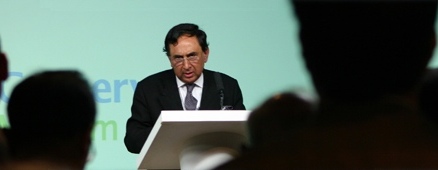
Lord Sheikh: My Lords, I care about humanity and I will speak out when I feel that injustice and cruelty are inflicted on people. I have spoken in your Lordships’ House on such subjects, including people trafficking, forced marriages, torture and the rights of Gurkhas. At the outset, I have no reservation in condemning the Hamas rockets that were directed into Israel’s sovereign territory; neither should we forget the deliberate targeting by the Israel Defence Forces to inflict collective and wholesale punishment on the people of Gaza.

At this stage, I reaffirm my belief in a two-state solution, with Israel’s right to exist and defend its territory. Alongside Israel’s right to exist, we must ensure that there is the creation of a viable Palestinian territory. No one could convince me that the conditions in which the Gaza Strip was held constituted a free sovereign territory. Those who lived in Gaza were detained in what amounted to little more than the largest open prison on the planet, with no control over their air space or their borders. That was not acceptable, and it is not sustainable.

The people of Gaza have, over a period of many months, lived in a cast-iron blockade. A lot has been said about the smuggling of weapons through the tunnels, but we must understand why the tunnels were dug in the first place. They have been used to bring in food, fuel, medical supplies and the basic necessities of life. If the blockade is lifted, the tunnels will disappear.

I regret that Israel chose to use its troops to inflict one of the most disproportionate and excessive deployments that we have seen in the world. The alleged use of white phosphorous and DIME weapons is disgusting and outrageous; to use this material against civilians is against international law. There have been other alleged abuses of international law, and I hope that the Minister can confirm that these will be investigated and that those responsible—if there is evidence to prove the allegations—will be pursued and prosecuted. They must be held to account for their decisions and their actions. Those allegations need to be investigated thoroughly, and I understand that the United Nations, the International Committee of the Red Cross and the Government of Israel will be leading that activity. The Government have confirmed that they are in contact with all three bodies, and I hope that the Minister will provide the House with an update on those investigations.

Israel refused to permit the world media to go to Gaza. We could understand perhaps that the reason could be that they did not want the world to know what was happening. The media were allowed in during the invasion of Iraq, Afghanistan and the Balkans. Notwithstanding the ban, horrific pictures were relayed by Al Jazeera and other channels telling us the reality of what was happening. The Israeli propaganda machine was strong, but watching the people of Gaza suffer on the few TV channels relaying from Gaza caused a great deal of distress to many right-thinking people. Jewish organisations such as Jews for Justice for Palestinians and Sir Gerald Kaufman in the other place have been very critical of the Israeli action. Countries such as Qatar and Turkey, which were friendly with Israel, are now very unfriendly towards it.

In total, around 1,200 Palestinians were killed during the recent onslaught. A significant number of these were women, children and innocent civilians. People who have been injured have been inflicted with serious burns and other horrific infirmities, and are in need of urgent care. We need to think about providing humanitarian aid to them from our facilities in Cyprus.

However, the damage goes well beyond the human cost, high though that is. There has been destruction of public services, infrastructure, power plants, hospitals, homes, mosques, universities and a number of other structures. The Israelis went on to damage the United Nations’ facilities and compound, causing deaths and injuries. The International Red Cross and the United Nations have condemned the Israeli actions. The Israelis failed to provide medical and humanitarian aid to the injured civilians and, in fact, hindered the Red Cross from doing so. This is contrary to international humanitarian conventions.

I should like to express my serious concern about the possible radicalisation and engendering of extremism among young people in this country and abroad as a result of the Israeli invasion. This should be a source of worry for us all. For my part, I will try to calm the situation.

Gaza’s condition was less than ideal before the conflict, and things have become considerably worse. The humanitarian catastrophe will become worse unless we all work together to help our fellow human beings. I deplore the decision of the BBC to refuse to broadcast an appeal to provide assistance to these people. Its actions are a case, in my view, of poor judgment.

We need to move on from conflict and work more actively towards a resolution of the historical events that have caused such misery and pain. I want to see a viable and secure Palestinian state that is able to live alongside Israel in peace. It is the western vision that any such Palestinian state should be a democracy, but there is a problem when we refuse to allow those citizens the right to make their own choice. We need to think again whether or not we should talk to Hamas.

In our deliberation we must realise how peace was achieved in Northern Ireland, with Martin McGuinness as the Deputy First Minister, and how South Africa attained its independence under Nelson Mandela. We need to think about creating unity between Hamas and Fatah, leading to a Government of national consensus. This will require active participation by the United States, the quartet and a number of other countries.

The programme of aid to the Palestinians has been linked to progress with the peace process. I hope that the Minister can confirm to the House that we will do everything we can to reduce and eliminate the suffering and that we will not allow obstacles to get in the way of bringing about an end to the suffering in Gaza.

In conclusion, we need to recognise that this conflict has been the cause of a great deal of suffering to a large number of people for decades. The recent misery must not be allowed to be a catalyst for further horrors. I wish Senator George Mitchell well in his endeavours on behalf of the new American Administration, and urge the Government to do what they can to facilitate engagement from all sides to achieve the destination of conflict resolution. The priority, however, must be, in the first instance, to relieve the horrendous suffering that has been inflicted on the people of Gaza and to ensure that those responsible for this misery are held to account for their decisions. I hope that the Government will not inhibit either of those activities. I would appreciate the Minister’s reply to the points I have raised.
Archive for Gaza, House of Lords, Palestine, Speeches

Lord Sheikh Letter to BBC regarding DEC Gaza Appeal01.28.09

Dear Mr Thompson

I am writing to express my extreme dissatisfaction with the BBC’s refusal to broadcast the Disasters Emergency Committee (DEC) Appeal to raise much needed funds for Gaza.

The reason expressed by you by stating “we could not broadcast a free standing appeal, no matter how carefully constructed, without running the risk of reducing public confidence in BBC’s impartiality in its wider coverage of the story” is not satisfactory and totally unacceptable. The DEC Appeal is not political; it is a humanitarian appeal trying to address the grave humanitarian crisis in Gaza.

As we all know there has been a complete destruction of schools, hospitals, mosques and homes in Gaza. Many have sustained horrific injuries (including many women and children) and a large number of people have been made homeless. There is a lack of the basic necessities of life which are urgently needed. The broadcasting of the DEC Gaza Appeal would have given great assistance to the people of Gaza when they need it most. We should not stand by idly while such a humanitarian disaster occurs.

Yours sincerely

The Lord Sheikh

Archive for BBC, Gaza, Palestine, Speeches

Israel and Palestine: Gaza01.21.09

Lord Sheikh: My Lords, I care about humanity and I would like to express my serious concern and sense of disturbance at possible breaches of international humanitarian laws by the Israelis. The use of white phosphorus shells by the Israelis against civilians, which is not allowed under the Geneva Convention, has caused horrific injuries the likes of which some doctors have not seen before.

The International Red Cross has strongly condemned the Israelis for neglecting their international obligations and for their lack of care of the sick and wounded. In addition, the Israelis did not allow the Red Cross to provide care for the wounded. In one case, rescuers found four small children lying next to the corpses of their dead mothers. There have been other incidents, but I should like to mention one more where 100 members of an extended family were herded by the Israelis into a house which was subsequently shelled by them, killing 30 people.

Mrs Pillay of the United Nations has said that the violations of international humanitarian laws may constitute war crimes, for which individual criminal responsibility may be invoked. The Secretary-General of the United Nations, Mr Ban Ki-Moon, has condemned Israel’s excessive use of force and has demanded that those responsible for shelling schools and other facilities run by the United Nations be held to account.

My urgent appeal is for us to be actively involved in caring for the injured and providing them with medical care and assistance in every way possible. We should then ensure that investigations are undertaken into the violation of international humanitarian laws and that appropriate action is taken against those who are guilty, whoever they may be.

Archive for Gaza, House of Lords, Palestine, Speeches

Israel & Palestine: Gaza01.20.09

Lord Sheikh:

    To ask Her Majesty’s Government what assessment they have made of whether international humanitarian law has been breached in the conflict relating to Gaza.

The Minister of State, Foreign and Commonwealth Office (Lord Malloch-Brown): My Lords, very serious allegations have been made against both Hamas and Israel. We take these very seriously and they must be fully investigated. The Israeli authorities have said that they are investigating specific incidents raised by the aid agencies. We will consider very carefully the results of investigations once they are available. At that stage, the parties and the international community will need to decide on any further action.

Lord Sheikh: My Lords, I thank the Minister for that reply. The people of Gaza have been subjected to collective and indiscriminate punishment by the Israelis, some of whose actions can perhaps be considered inhumane. Israel has used white phosphorus shells, whose use against people is prohibited under the 1980 Geneva Convention, and there may have been incidents whose investigation is likely to find breaches of international humanitarian laws. There have been statements of condemnation—

Noble Lords: Question!

Lord Sheikh: My Lords, will the Government take a lead to facilitate a full and thorough investigation by the United Nations and the Red Cross to determine whether there have been breaches of international laws and to ensure that appropriate remedial action is taken? Will the Minister keep your Lordships’ House advised of progress in this regard?

Lord Malloch-Brown: My Lords, let me assure the noble Lord that my right honourable friend the Foreign Secretary has said in another place that we fully support investigations of these allegations. In the first instance, it is a matter for the International Committee of the Red Cross and the United Nations, both of which are on the ground and both of which have the responsibility for collecting evidence of the different incidents that have occurred. It is also the responsibility of the Government of Israel, as a party to the international laws that govern this—particularly the Geneva Conventions—to make an initial investigation. However, there is no doubt that, if these allegations stand up, they will need to be pursued internationally. These are very serious crimes, if they were committed.

Archive for Gaza, House of Lords, Palestine, Speeches

Palestine: Occupied Territories07.03.07

Lord Sheikh: My Lords, I thank the noble Lord, Lord Dykes, for initiating this timely debate. I chair the Conservative Muslim Forum, and I am involved in interfaith dialogue promoting peace and harmony among different racial and religious groups. I am convinced that the majority of Israelis and Palestinians want a durable two-state solution. That being said, history has proven that Israelis and Palestinians, even when they are ready to negotiate directly, will need a credible third party to guide them through the process. Here, the role and full support of the President of United States will be essential. America remains the only power that is acceptable to both sides. I welcome the appointment of Tony Blair as the Middle East quartet’s new envoy. He is likely to obtain support from America and from other countries. He has the skills to engage with Hamas as he did with Sinn Fein.

The UK must continue to work closely with the quartet and with regional partners to negotiate, mediate, help strengthen Palestinian institutions and to improve security. We must offer President Abbas our full support in putting together a “moderate”

3 July 2007 : Column 976

Government of national unity that is critical to taking forward the peace process. We have made it clear that we would be prepared to move forward on the quartet’s three principles: renunciation of violence, recognition of Israel, and acceptance of previous agreements and obligations. There are encouraging signs. At a summit in Sharm el-Sheikh, Ehud Olmert promised to release some $560 million in frozen tax revenues to the Palestinian Authority, to free some 250 Fatah prisoners from Israeli jails, to ease restrictions on the movement of Palestinians in the West Bank and to enhance Israeli trade with the Palestinians. Such actions are vital to the Palestinian people and will help to improve the humanitarian and economic situation, which is dire and critical. Greater freedom of movement would produce immediate and significant benefits. A lot of the violence is a result of frustrated Palestinians who are not able to obtain the basic necessities of life.

The peace process ought to be based and concluded on the basis of a two-state solution, and I believe that there is a glimmer of hope emerging for renewed engagement between Israel and the Palestinians.

Baroness Morgan of Drefelin: My Lords, I remind the House that when the clock reaches three, that means that three minutes have passed. This is a timed debate, and we are very short on time.

Lord Sheikh: My Lords, just give me two seconds.

I am impressed by the One Voice movement, which is an organisation that is working towards achieving peace in the Holy Land. One Voice is holding a solidarity event on 25 July on Abingdon Green.

Archive for House of Lords, Palestine, Speeches

Palestine: Occupied Territories01.11.07

My Lords, almost four decades of protracted occupation and conflict have left the Palestinian territories with what might be best described as a “war economy”, with all the implications that has for social, economic and political development.

The Palestinian economy relies heavily on donor aid, including the temporary international mechanism devised by the European Union and the World Bank, which bypasses the Hamas-led Government and provides aid direct to Palestinian people. Although I support this mechanism and the work of the diplomatic quartet established by the United Nations, the United States, Russia and the European Union, I have concerns over the cutting of funding. For example, one effect of the freeze in aid is that salaries of some 160,000 government workers have gone largely unpaid. That cannot but further undermine the Palestinian economy and civil society.

A significant share of donors’ assistance in the last four years has been for relief efforts aimed at poverty alleviation. Poverty will undoubtedly continue to be a serious problem as long as current political conditions persist. Certainly, the grotesque levels of poverty in some Palestinian territories, especially in the Gaza Strip, remains a recruiting sergeant for disaffected and alienated youth. It is right therefore that poverty alleviation should have a high priority in Palestinian development strategy.

Micro-financing has helped to develop economies around the world and I believe there is no reason why it cannot be part of the solution in Palestine. I have seen for myself the success of micro-financing in some parts of the globe, including in the Indian subcontinent, where micro-financing of very small scale enterprises has proved a significant stimulus to economic growth and the creation of new breeds of entrepreneur. It has also provided women with the opportunity to gain empowerment, through gaining success with funding and resources, and start small home businesses. That is especially important at the current juncture. In effect, they can help themselves and their local communities through such small entrepreneurial schemes, which will help to circulate finance within local villages and communities.

Yesterday I was with the High Commissioner of Bangladesh, discussing at length the micro-credit and financing arrangements in Bangladesh and the success of the operations. Some of what they do can perhaps be replicated in the Palestinian territories. I have recently been asked to become involved with a group carrying out micro-financing operations in the Palestinian territories. I believe that micro-financing could provide some Palestinians with the key to improving their own living standards and aiding economic development. Could the Minister kindly tell the House what steps, if any, have been taken to support micro-financing schemes in the Palestinian territories?

Unfortunately, I feel that providing relief and development is only a short-term solution. It is important to recognise the adverse effect of economic dependence of the Palestinian territories on Israel, formed over the past decades. On the point, may I ask what measures Her Majesty’s Government are taking for a new policy framework to move from providing relief and development only to one which helps support the Palestinian people become more economically empowered?

Without such empowerment all forms of peace proposals and dialogue, although valuable, threaten to remain ineffective. As poverty aids violence, so wealth creation will aid stability, for both the Palestinian territories and Israel.

Experience in the Holy Land has shown that hopelessness leads to violence, but the prospect for empowerment leads to peaceful co-existence.

Archive for House of Lords, Palestine, Speeches

  • You Avatar
    Lord Sheikh is a Conservative Peer, businessman, academic and philanthropist. This is his website.